Moss on a roof is more than cosmetic. Thick moss holds water against the tiles, can lift tile edges and block gutters and downpipes when it washes off, and in cold weather the trapped water can freeze. Lichen and algae are thinner but still hold moisture and make the roof look tired. Concrete tiles, which are porous and slightly rough, are the most prone to growth.
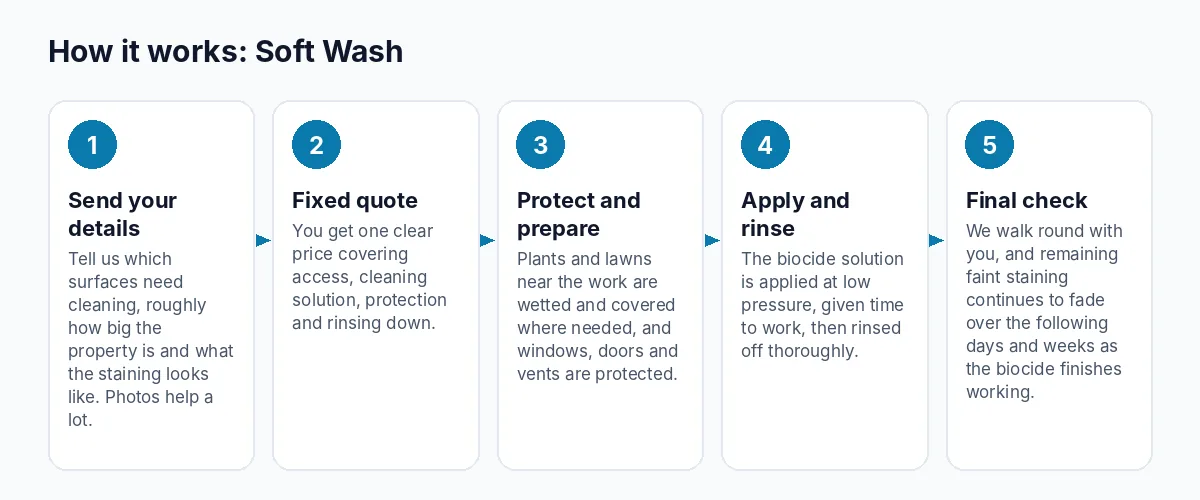
Pressure washing a roof can strip the surface from concrete tiles, crack old clay tiles and slates, and drive water up under the laps into the roof space. Soft washing kills the growth at low pressure instead. Heavy moss is usually brushed or scraped off first, then the biocide is applied, and the remaining growth dies back and is washed away by rain over the following weeks.
What is included
- Inspection of the roof covering and any slipped, cracked or missing tiles
- Hand removal of heavy moss clumps from tiles, ridges and valleys
- Low-pressure biocide treatment of the whole roof covering
- Protection of plants, conservatories and surfaces below
- Clearing moss and debris from gutters after the treatment
- Rinsing of windows, sills and paintwork affected by run-off
- Report of any roof defects noticed during the work
Who it is for
- Concrete tile roofs with moss, lichen and green algae
- Clay tile and slate roofs where high pressure could cause breakage
- Roofs under or near trees that green up quickly
- Owners selling a property who want the roof to look cared for
- Roofs where moss is repeatedly blocking gutters
How much does it cost?
As a guide, roof soft washing usually costs £400 to £800 for a semi-detached house and £600 to £1,000 or more for a detached house. Steep pitches, three-storey buildings and roofs needing scaffold or a cherry picker cost more. See our full cost guide.