Modern thin-coat renders such as silicone and acrylic are designed to shed dirt, but in damp, shaded spots they still grow algae and black mould, especially on north-facing walls and under trees. Older sand-and-cement, painted and pebbledash renders stain even more readily. The staining is living growth, not dirt, and it comes back quickly if it is simply blasted off without being killed.
High pressure is the wrong tool for render. It can scar thin-coat finishes, strip paint, dislodge pebbledash and drive water into cracks and behind the render. Soft washing applies a biocide at low pressure, gives it time to work, and rinses gently, so the surface is cleaned without damage. Some render manufacturers specify low-pressure biocide cleaning as the maintenance method for their systems.
What is included
- Inspection of the render type, condition and any cracks or blown areas
- Pre-wetting and protecting plants, lawns and nearby surfaces
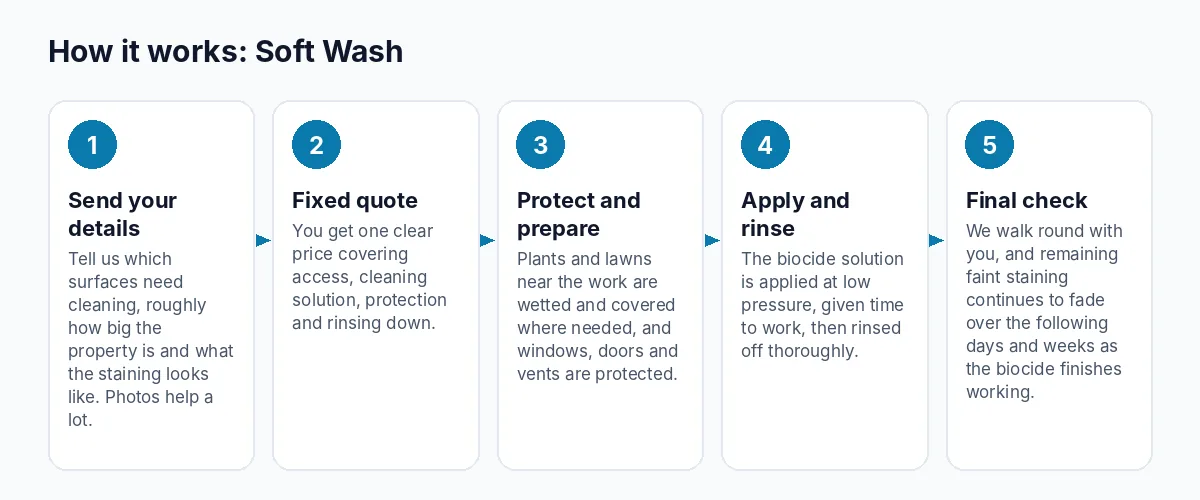
- Low-pressure application of a biocide matched to the render and the growth
- Dwell time for the solution to kill algae, mould and lichen
- Gentle rinsing of walls, windows, frames and sills
- Cleaning of render beads, sills and plinths on the same elevations
- A final walk round to check coverage and any areas still fading
Who it is for
- Silicone and acrylic thin-coat render with green algae or black mould
- Monocouche through-coloured render that cannot be repainted easily
- Painted sand-and-cement render that is stained but still sound
- Pebbledash and roughcast where high pressure could dislodge stones
- Owners preparing a property for sale or re-letting
- Anyone who wants to delay the cost of repainting or re-rendering
How much does it cost?
As a guide, render soft washing usually costs £300 to £600 for a terraced or semi-detached house and £600 to £1,100 for a detached house, or about £4 to £8 per m², depending on height, access and how heavy the growth is. See our full cost guide.